
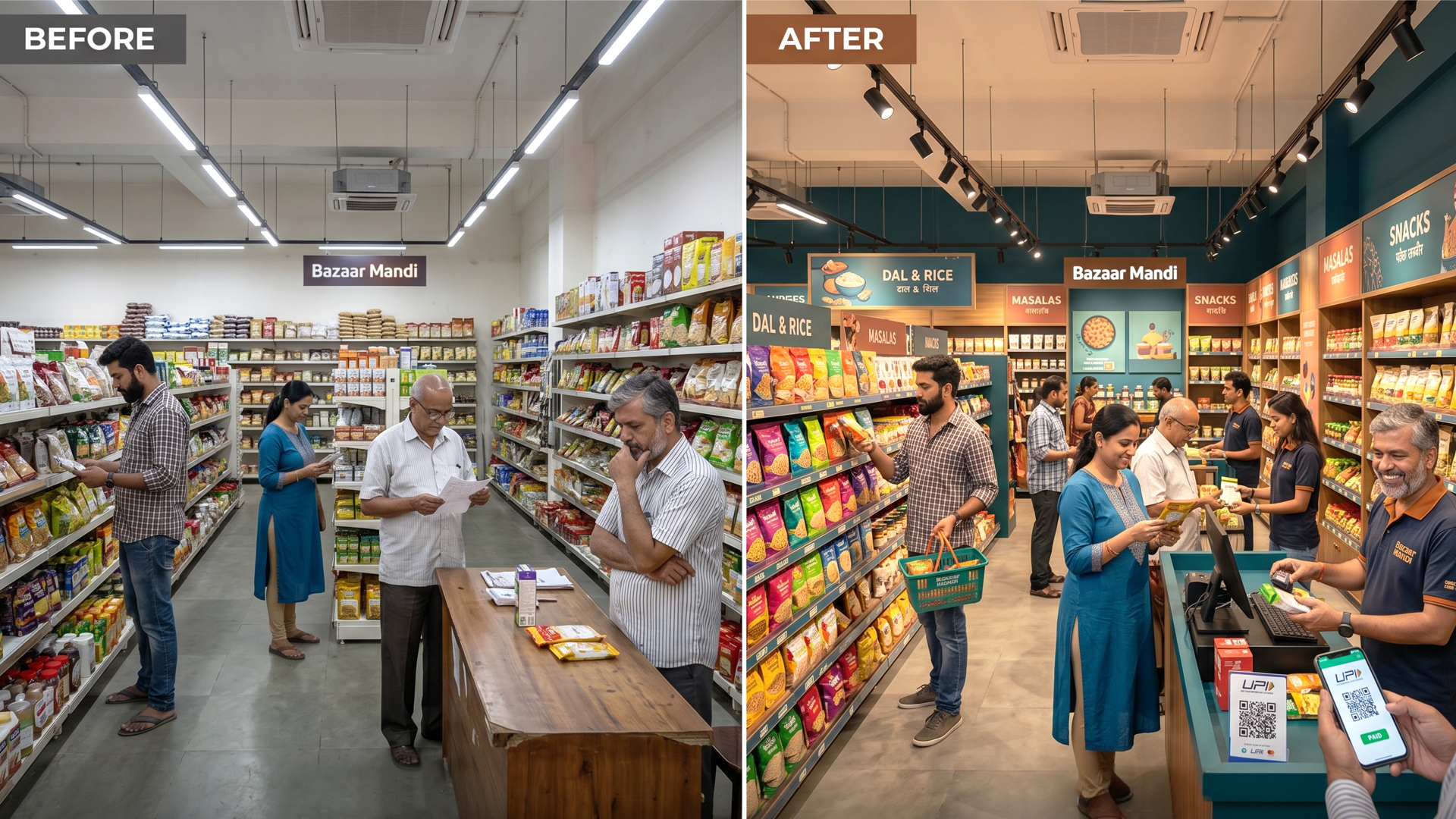
Branding helps to build trust among customers and boost sales. Branding creates customer confidence and drives sales.
Ever, at some point have been a consumer, and at some point, whether you realize it or not, every consumer has had a moment like this. You're in front of a shelf or searching online and considering two products that are almost equal in quality, function and price. Yet, you make the decision to take one over the other more or less instinctively. That's usually not a decision based on the product, but on the brand behind it.
For this is the power of a brand without a shout. It's not just a pretty site for your business, it is a believable business. Believability is the building block of trust and sales.
In this article, we'll explore how branding establishes customer trust, the importance of this trust for sales and how you can start to make your own brand more trustworthy right now.
A common misconception about branding is that branding starts and ends with a logo, color palette, font selection. These are important but it is only the tip of the iceberg of so much more.
Branding is the total of all the thoughts a customer has about your business. It's the way your website makes them feel. It's the attitude in your customer service correspondence. Whether your product is delivered on time and what was promised. It's the tale you tell of why your company came into being.
In short: Your logo is your face, your brand is your reputation. Reputation takes years to build, a few years to lose and isn't built by a clever design.
It's important to note that many companies put a lot of effort into their appearance, but little effort into establishing true trust. A shiny face will get the eye, but it won't retain it. Trust does that.
It's easy to imagine that sales and trust are a pair of totally diverse objectives that a company attempts to reach together. Actually, trust can't be parallel to sales, it's a prerequisite for sales.
Remember the last time you were hesitant to buy from an unknown company. Perhaps you had no idea if the item would provide the promised results. Perhaps you feared scams or less than stellar customer service or an onerous return policy. That is a direct result of a trust gap and no matter how much marketing and discounting is done, no one will buy until that gap is closed.
Consistency creates familiarity. When the message, the imagery and the voice is consistent across all of your interactions with your customers, your customer starts to feel like he or she knows you. It is easier to do business with something that is familiar, than unpredictable.
Transparency removes suspicion. Good brands are honest, they reveal their identity to their customers, their products, and what to expect. No bait and switch, no fine print, no confusing messaging. Leaving the customer with a lowered guard, this honesty indicates that a business has nothing to hide.
Loyalty is developed through emotional connection. Often consumers do not recall all the technical details of a product. What they do recall, however, is how a brand made them feel – understood, valued, respected, or even inspired. It's that emotional touch that often makes the difference when a customer is weighing choices.
These three elements combined, something big happens: your customer no longer thinks of your business as just another business, instead they think of you as the business they can trust.
Trust is established through branding, it's a fact. It's another to comprehend precisely how that trust translates into income. Let's examine how it works.
Brands that are trusted and better known to the public. This is one of the best documented consumer attitudes. If a customer feels confident in a brand, they're not only purchasing a product, they're purchasing confidence. The trust and confidence that the product will work as advertised. Trust that the company will do no harm if there is harm done. This confidence alleviates the risk to the customer, which makes them more likely to pay more for that item than to take the risk on a lesser known or more affordable item.
Trust eliminates friction when buying. When a customer is making a purchase they are always feeling a bit of risk and benefit. By creating a solid brand, you can cut that down. With trust established, customers go through the buying funnel faster, have less second-guessing, and fewer cart abandonments.
Repeat customers are the result of trust. New customers cost much more than existing customers. Once brands make a promise and then deliver on it, they create a loyal following who do not need reminders of the promise with each purchase. It's often the repeat business that sets successful, long-term businesses apart from the one-time sale businesses.
Word of mouth advocacy is created by trust. One of the most important things that can happen from a well-branded business is that loyal customers will be vocal supporters. They tell their friends, family and co-workers about your business not because they're being paid to, but because they truly believe in the products and/or services you provide. This type of organic marketing is more convincing than paid marketing, and much cheaper, too.
All in all, these factors indicate that branding is not a mere nice to have, it's a straight line to financial results. A business with a healthy brand doesn't just sell moreit sells more efficiently, too, and keeps customers longer and gains customers through word of mouth, not through constant advertising.
The theory is one thing, but applying it is another. Using it is another.Applying It is another. Here are a few practical, actionable steps to begin building trust in your brand.
Be consistent on all platforms. Your website, social media, packaging, and communications to customers should all emanate from one voice. With inconsistent branding you introduce confusion, and when there's confusion, trust is lost.
Show up authentically. Don't copy what others or the industry are doing – be true to your business's voice and values. Authenticity is hard to fake and customers are getting better at noticing when a brand is inauthentic or insincere.
Keep making good on your commitments, all the time. Once you have decided on a shipping date, a warranty to return the product, or a service standard, keep to it. Trust can be earned quickly and lost even quicker when you lack reliability.
Interact with your audience in a meaningful way. Reply to comments, answer questions and accept positive and negative comments. When you listen and adapt to your customers, you can expect them to trust the brand; when you just broadcast a message without listening, they will not.
Tell a true tale. Individuals touch individuals, not faceless organizations. When your business doesn't just exist to make a profit, it exists to solve a problem and help a certain audience, it's easier for your customers to relate to and more humanizing.
All of these strategies do not yield immediate results. Trust is developed over time, through a series of positive interactions. But with every consistent and honest touchpoint, a new layer is added to the foundation that will eventually lead to customer loyalty and sales increase.
The essence of a brand is not about presenting an impressive image but about being credible. Customers will purchase from a company when they trust them. Over and again, and frequently to others, too.
In the case of business development and expansion, it's worthwhile to change the question you ask yourself. Rather than how can I make more sales ask how can I be a trustworthy business.
After all, sales are not the primary focus. The trust does. Once this trust is gained, the sales follow.
